Retaining walls keep soil intact, prevent erosion, and provide a level yard surface. They serve the purpose of keeping your yard protected and ensuring its safety in case you have a sloped landscape. However, due to different factors, retaining walls tend to deteriorate with time.
Overlooking the early retaining wall repair signs can result in expensive repairs or complete structural failure. Having an idea about these signs is critical for property owners who need to address any problems early enough to prevent them from becoming dangerous situations. Some situations will only need a small repair job, while others will require retaining wall replacement entirely.
Here are 5 warning signs that your retaining wall requires professional attention.
1. The Wall Is Leaning or Tilting
The leaning retaining wall is one of the most obvious signs of problems. The purpose of retaining walls is to stay vertical while bearing the weight of the soil from behind. Once a wall starts leaning, it indicates that the structure cannot bear that load anymore.
There are various causes for such problems, including poor construction, shifts in soil, excess moisture, and a weak foundation. In general, even minor leans tend to grow worse with time.
Skilled contractors will be able to establish whether it is possible to strengthen the existing wall or if a whole retaining wall replacement is needed. Early action can save other damages to the property.
2. Visible Cracks Are Appearing
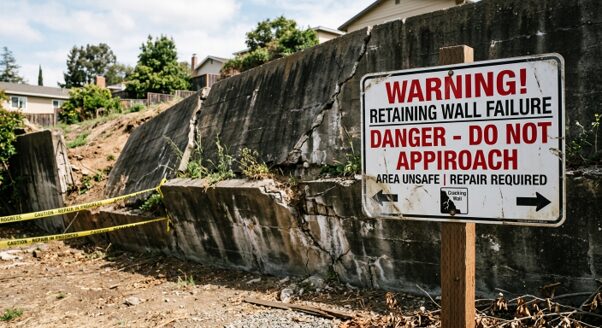
Hairline cracks might seem harmless at first glance, but larger or expanding retaining wall cracks are likely to show other signs of structural damage. Cracking occurs due to undue pressure, movements in the wall’s foundation, or the deterioration of the wall’s materials.
Retaining walls made of concrete, stone, wood, or blocks may develop cracks with time. The position and size of the cracks will allow assessing whether it is possible to repair them, or whether the wall has already been seriously damaged structurally.
If you observe cracks that appear or grow bigger, it is advisable to organize a Retaining Wall Inspection by professionals as soon as possible. This will help prevent further damage to your wall, landscaping, and other outdoor structures.
3. The Wall Is Bulging or Bowing
A bulging retaining wall is yet another major warning sign that must never be overlooked. Bulging takes place due to the inability of the wall to withstand the force exerted from behind it.
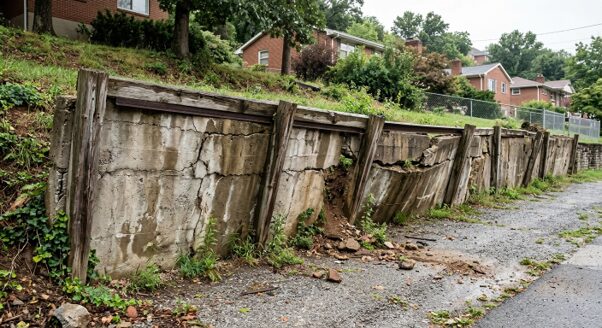
The reason for this is usually:
- Poor drainage
- Oversaturation of soil
- Improper material used as backfill
- Weak construction
- Degradation of structural parts
Bulging indicates the wall is losing its ability to retain soil safely. If ignored, sections may eventually collapse.
Professional contractors can assess whether reinforcement methods are appropriate or if the safest solution is a complete retaining wall replacement.
4. Water Is Not Draining Properly
Water is one of the biggest enemies of retaining walls. Retaining wall drainage issues create hydrostatic pressure behind the structure, placing enormous stress on the wall.
Common drainage warning signs include:
- Water pooling behind the wall
- Wet soil remaining saturated after rainfall
- Soil washing through joints or gaps
- Visible erosion near the base
- Water stains or mineral deposits
Bulging means that the wall is no longer able to contain the soil safely. Without proper treatment, parts of the wall will end up collapsing.
The contractors are able to determine if reinforcement is necessary or if total retaining wall replacement would be the best course of action.
5. Loose Blocks, Rotting Materials, or Shifting Sections
In case your wall appears to be loose or uneven, urgent action should be taken. This is because timber retaining walls could be deteriorating, and concrete block or stone retaining walls may start moving.
Visible problems in your retaining wall could mean there are underlying structural issues. The lack of blocks, separation of joints, or deteriorated materials makes the wall weak and unable to hold the soil.
A competent contractor will determine how much damage there is in an inspection of the retaining wall and whether the retaining wall needs repair or replacement.
Repair or Replacement: Which Option Is Best?
Replacement is not necessary for all cases of retaining walls that are damaged. For minor cracks, drainage problems, or material damage, repairs can be done effectively. It is always cheaper to repair an issue before the structure fails completely.
Replacing the wall would be a wise decision in any of the following situations:
- Significant leaning
- Several instances of structural failure
- Large portions are displaced
- Significant retaining wall structural damage
- The poorly constructed or designed wall originally
A professional contractor will assess the wall and determine the best course of action based on the wall’s structural integrity.
What Affects Retaining Wall Repair Cost?
Retaining wall repair cost is among the most common questions asked by homeowners, yet there cannot be one answer to this question due to the unique nature of every construction.
Several factors influence pricing, including:
- Size and height of the wall
- Construction material
- Extent of structural damage
- Drainage improvements required
- Accessibility of the site
- Whether repair or replacement is needed
An inspection by a professional will give you an accurate assessment as well as an estimation of the cost for repair. Making necessary repairs can save you money on a future replacement of your wall.
Prevent Future Problems with Regular Maintenance
Proper preventive maintenance will greatly extend the life of your retaining wall and reduce the need for costly repairs.
Good Retaining Wall Maintenance involves:
- Checking the wall following periods of rain
- Ensuring that drainage channels are free of obstructions
- Watching out for any signs of cracking or shifting
- Containing the growth of plants in the area
It is important to catch any problems before they become serious problems and cause any damage or destruction to your landscaping.
Conclusion
The retaining wall protects your landscape, foundation, and property from erosion and any other soil movement, provided it is still structurally sound. It is important to be able to identify Early signs of retaining wall failure, such as leaning, cracks, bulges, drainage problems, and even material shifts.
Whether you require repair or a replacement for your wall, proper work will give you a lasting and safe solution. Inspection and maintenance will help protect your investment and keep your outdoor area safe in the long run.
Frequently Asked Questions
1. What are the first retaining wall repair signs?
Early signs that your retaining wall needs repairs include cracking, leaning, drainage problems, bulging, and loose material.
2. Can retaining wall cracks be repaired?
Minor retaining wall cracks are usually fixable, while expanding cracks can indicate structural damage, which means replacement.
3. How do I know if I need a retaining wall replacement?
In case the wall is leaning, bulging, collapsing, or showing any signs of structural damage, retaining wall replacement should be your first priority.
4. How often should a retaining wall inspection be done?
It is recommended to conduct a professional retaining wall inspection periodically and after heavy rainfall or any visible changes in the state of the wall.
5. What causes retaining wall drainage issues?
Common reasons for drainage problems in retaining walls include poor drainage, clogged weep holes, heavy rainfalls, and inappropriate backfill material.