Table of Contents
Turn Your Basement Into Legal Living Space in Toronto
Turning a basement into a legal secondary unit in Toronto is one of the most effective ways to add practical, flexible space to your home. A legal basement conversion in Toronto means creating a self-contained secondary suite that meets the Ontario Building Code, Ontario Fire Code, City of Toronto zoning bylaws, and all related safety standards. When done properly, it is treated as its own dwelling unit, not just a finished rec room.
For many homeowners, a legal basement suite can serve as long-term rental income, a private space for adult children or parents, or simply a way to increase overall property value. It can also make your home more appealing to future buyers who want income potential already built in. At Jacko Contracting, we focus on residential renovations across Toronto and the GTA, and basement conversions are a key part of what we do, so we understand how to bring design, permits, and construction together in a code-compliant way.
What Makes a Basement Apartment Legal in Toronto
A basement apartment is only legal if it satisfies several layers of regulation. The main ones are the Ontario Building Code for structure and health, the Ontario Fire Code for fire safety, the City of Toronto Zoning Bylaw for where secondary units are allowed and how they must be arranged on the lot, and the Electrical Safety Authority requirements for electrical work. All of these need to line up before a unit can be considered legal.
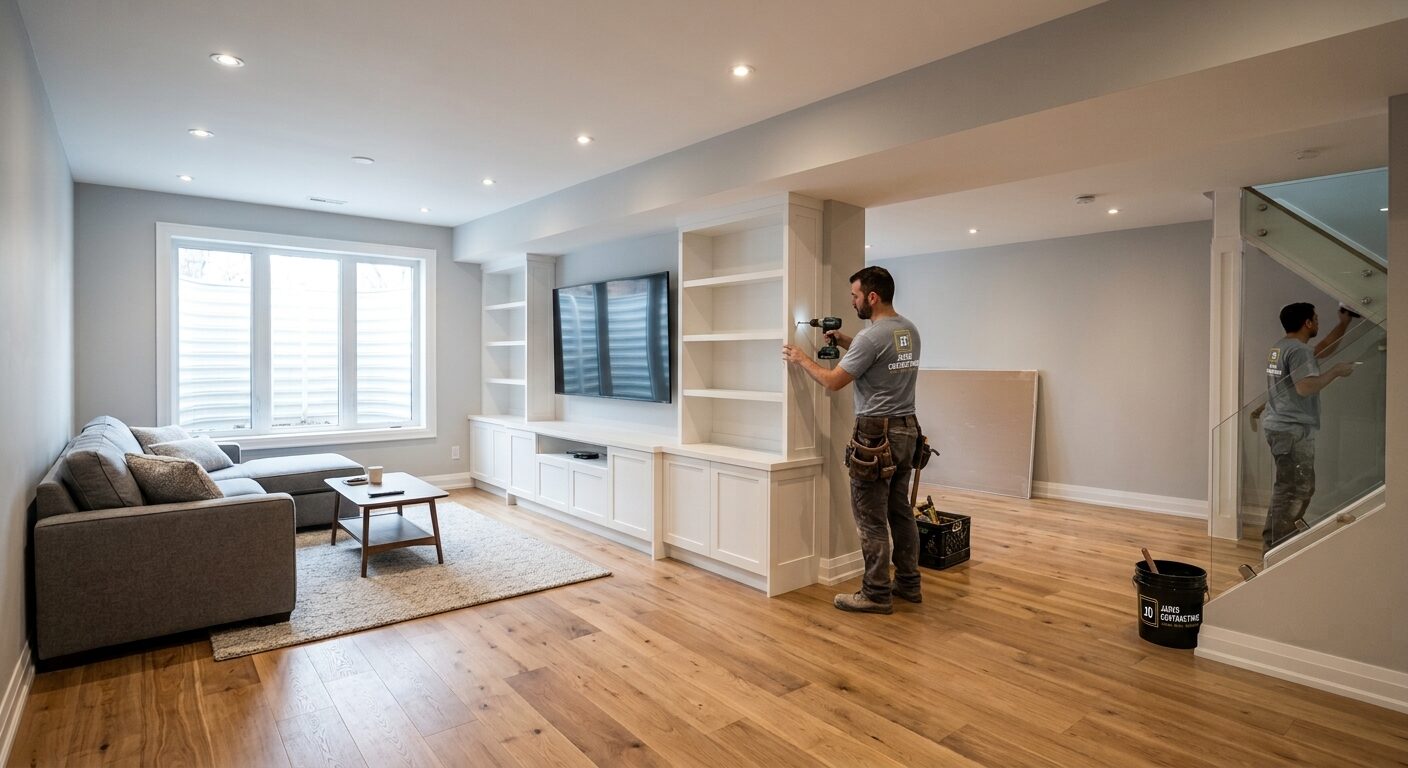
On a practical level, that means the space must feel and function like a proper home. Key requirements usually include minimum ceiling heights, safe exits or egress windows that allow people to escape in an emergency, proper fire separation between units, and enough natural light and ventilation. Sound control is also important so that both units are comfortable. In many projects, the basement suite will need its own heating controls, correctly sized and inspected electrical systems, and plumbing that can handle another kitchen and bathroom. Depending on the layout, an independent entrance can also be required or strongly recommended.
Zoning, Bylaws, and When a Basement Suite Is Allowed
Before thinking about finishes or floor plans, zoning decides whether a legal basement conversion in Toronto is possible on your property. Different neighbourhoods and housing types can have specific rules about secondary units. Detached homes, semis, and townhouses can all be treated differently, and there can be conditions related to on-site parking or access to the unit.
Typical zoning limits can include how many units are allowed on a single lot, minimum lot area in some zones, and where entrances are permitted on the building. There can also be rules around setbacks, how close new entrances or stairwells can be to property lines, and whether parking has to be maintained or added. A quick online search is not enough here, because the details can be technical and very site-specific.
This is why a proper zoning review before design work starts is so important. As a general contractor, we coordinate with designers or planners to confirm that a secondary suite is permitted on your property, and what conditions must be met. That way, everyone is designing to the right rules from day one, instead of reworking plans later.
Permits, Inspections, and the Approval Process
Any legal basement conversion in Toronto must go through the building permit process. This usually starts with measured drawings of the existing basement and proposed plans that show walls, doors, windows, mechanical systems, and any structural changes. Those drawings are submitted for zoning review, and if zoning is satisfied, the building department reviews them for building code compliance.
As work progresses, there is a sequence of mandatory inspections. Common stages include:
- Framing inspection, to check structural work and any new walls
- Plumbing inspection, for drains, vents, and water lines
- Electrical inspections, usually by the Electrical Safety Authority
- Insulation and vapour barrier inspection, before walls are closed
- HVAC inspection, if ductwork or new equipment is added or altered
Only after all these pass will a final inspection and occupancy approval be issued. Timelines depend on permit review times, contractor scheduling, inspection booking, and any drawing revisions requested by the city. Working with a contractor who deals with this process regularly helps keep paperwork complete, inspections ordered at the right time, and issues resolved quickly.
Design and Construction Essentials for Safe Basement Suites
Basements come with their own construction challenges, so design has to balance comfort, safety, and durability. In some homes, the existing basement height is too low, and underpinning or floor lowering is needed to gain headroom that meets the minimum height. Waterproofing and proper drainage are also essential to keep the suite dry and to protect finishes over time, especially with Toronto’s mix of wet seasons and temperature swings.
Fire and life safety details are a big part of a legal unit. That often includes fire-rated walls and ceilings between units, self-closing doors where required, and interconnected smoke and carbon monoxide alarms. Egress windows or exit doors must meet specific sizes and clearances so occupants can get out and emergency crews can get in. Stairs and handrails need to meet building code for rise, run, and guard heights.
Beyond safety, good design decisions are what make a basement comfortable to live in:
- Moisture-resistant flooring and wall finishes suited to below-grade spaces
- Sound-absorbing insulation between units to keep noise down
- Smart layouts that make the most of limited square footage
- Careful placement of furnaces, water heaters, and panels so they are accessible but not intrusive
We always look at how the suite will actually be used day to day, and design details around that.
Budget, Timelines, and Avoiding Costly Mistakes
Costs for a legal basement conversion in Toronto can vary widely, and it helps to understand what drives the budget. Underpinning or significant structural work will add cost and time. Adding or separating services like electrical panels, plumbing lines, and HVAC can also be a major part of the investment. The existing state of the basement, such as moisture issues, low ceilings, or outdated wiring, plays a big role, as does the quality of finishes you choose for kitchens, bathrooms, and flooring.
From first consultation to final inspection, the process is rarely quick. Design and permit approvals take their own time, then construction and multiple inspection stages add to the timeline. Flexibility is important, because inspection availability and any required corrections can shift the schedule. Planning with realistic expectations at the start keeps stress levels lower during the build.
Trying to shortcut the process with unpermitted or partial work can lead to serious problems later, including:
- Fines or orders from the city to remove or correct work
- Insurance issues if there is a fire, flood, or injury in an illegal unit
- Safety risks for tenants and your own family
- Trouble selling the home if the basement is not recognized as a legal suite
Building it right, with permits and inspections, protects both your investment and the people living in the space.
Partner with Jacko Contracting for a Stress-Free Conversion
A successful legal basement conversion in Toronto is as much about planning and compliance as it is about good construction. Choosing a contractor who understands residential renovations, local bylaws, and the permit process can make the difference between a stressful project and a smooth one. At Jacko Contracting, we bring together design coordination, site experience, and clear communication to keep projects organized from start to finish.
Our typical approach includes an initial site visit to review your existing basement, a feasibility check that considers zoning and structural conditions, collaboration with design professionals, and a detailed written quote so you know what is included. From there, we help with permit applications, manage trades on site, and prepare for each inspection stage. Before anyone moves in, we walk the space with you to review finishes, safety features, and how the new suite functions as a complete, legal home within your home.
Get Started With Your Project Today
If you are ready to add safe, code-compliant living space to your home, our team at Jacko Contracting can guide you through every step of your legal basement conversion in Toronto. We handle the details so you can feel confident about permits, inspections, and long-term value. Reach out to contact us today and let’s discuss how to turn your basement into a functional, income-ready space.