Executive Summary
Roof leaks in Toronto can range from a relatively small flashing or shingle repair to a larger problem involving roof decking, attic moisture, insulation or structural damage. For planning purposes, minor leak repairs may start around $450–$1,200, while more involved repairs can cost $1,500–$3,500 or more depending on the source and extent of damage.
One of the biggest challenges is that the visible ceiling stain is not always directly below the roof entry point. Water can move through roofing materials, framing and insulation before becoming visible inside the home, making professional leak diagnosis important.
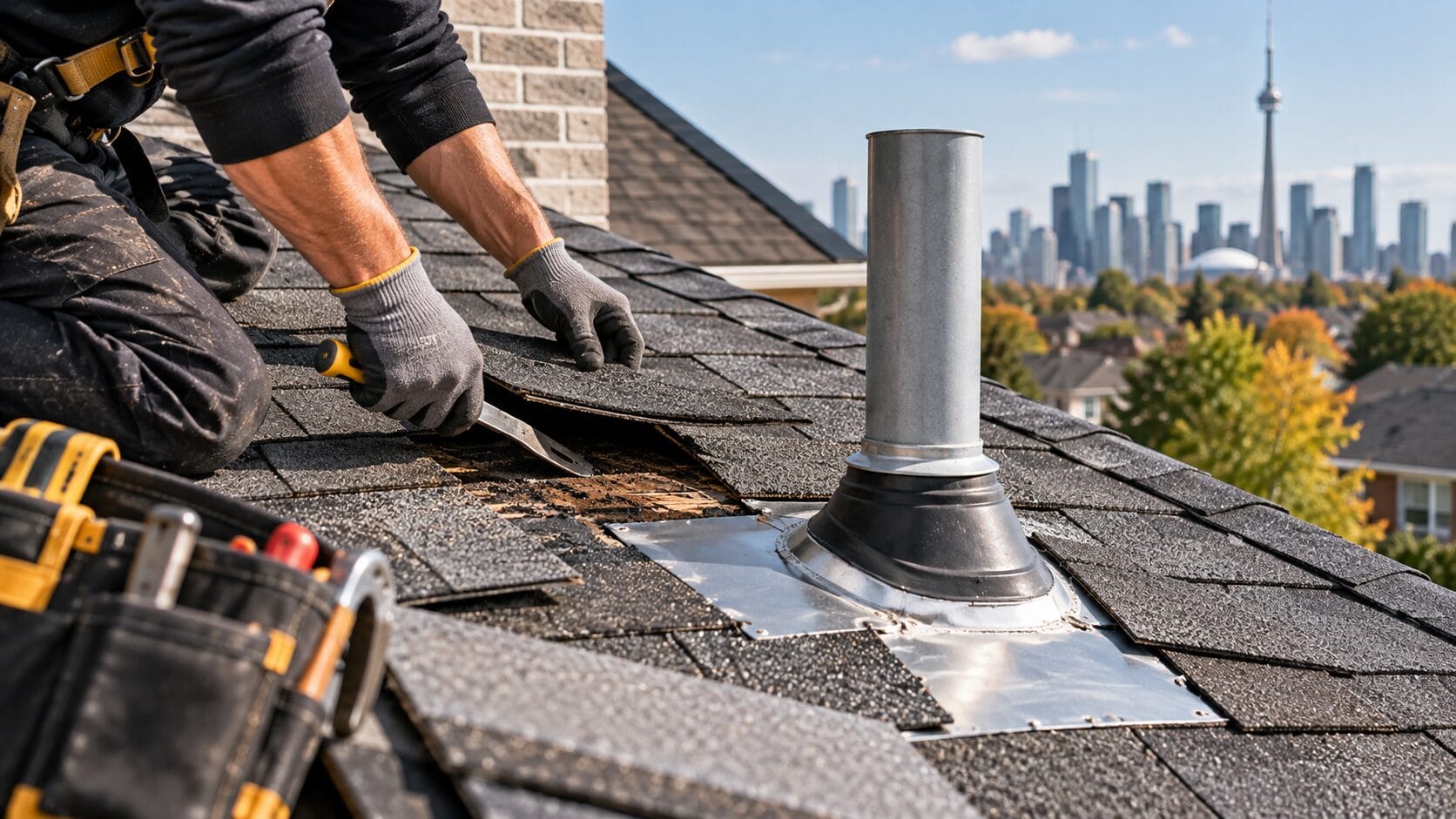
Common causes include damaged shingles, plumbing vent boots, chimney or wall flashing, roof valleys, skylights and other roof penetrations, ice dams, and moisture or ventilation problems in the attic.
The right repair depends on the age and condition of the roof, the location of the leak, the roofing material, accessibility and whether the underlying roof deck or framing has been damaged. A roof leak does not automatically mean the entire roof needs to be replaced.
This guide explains typical Toronto roof leak repair costs, common sources of water entry, repair-versus-replacement considerations, safety and permit considerations, and what homeowners should ask before hiring a roofing contractor.
How Much Does Roof Leak Repair Cost in Toronto?
The following are planning ranges rather than fixed quotes. Actual pricing depends on roof height and access, roofing material, leak location, repair area, flashing details, weather conditions, underlying damage and whether interior restoration is required.
| Repair Type | Typical Planning Range | What Can Affect the Price |
| Plumbing vent boot repair/replacement | $450–$850 | Roof access, boot condition, surrounding shingles and flashing |
| Localized flashing repair | $750–$1,800 | Chimneys, walls, valleys, roof intersections and extent of deterioration |
| Ice-dam related repair | $950–$2,500+ | Roof access, ice accumulation, damaged materials and follow-up repairs |
| Wind-damaged shingles | $500–$1,200 | Number of damaged shingles, roof pitch, access and material matching |
| Roof deck / localized structural repair | Site-specific | Extent of moisture damage, decking, framing and access |
| Larger roof repair or replacement | Site-specific | Roof size, material, tear-off, decking, flashing and restoration |
Where Does the Water Actually Come From?
A ceiling stain is a symptom, not necessarily the location of the roof defect. Water can move along the underside of the roof assembly, framing or insulation before it becomes visible. That is why simply patching the visible interior stain may not solve the underlying problem.
Common Roof Leak Sources in Toronto
1. Plumbing Vent Boots
The rubber or flashing components around plumbing vents can deteriorate or fail, allowing water to enter around the penetration.
2. Chimney and Wall Flashing
Flashing at roof-to-wall and chimney intersections is exposed to weather and movement. Damaged, displaced or deteriorated flashing can create localized leaks.
3. Ice Dams
Snow and ice can accumulate near roof edges during winter conditions. When meltwater is unable to drain normally, water can reach vulnerable roofing or flashing areas.
4. Damaged or Missing Shingles
Wind, impact, age and weather exposure can damage shingles or expose areas where water can enter the roof assembly.
5. Roof Valleys
Valleys collect and direct significant amounts of rainwater. Damaged roofing, underlayment or valley detailing can contribute to leaks during heavy precipitation.
6. Skylights, Vents and Other Roof Penetrations
Every roof penetration creates a flashing and sealing point that needs to remain watertight. Failed seals or flashing can cause leaks around the opening.
Where Is the Water Coming From? Common Symptoms & Possible Causes
| What You Notice | Possible Cause | What Should Be Checked |
| Leak around a bathroom ceiling | Plumbing vent boot or roof penetration | Roof penetration, flashing and attic moisture |
| Water near a chimney | Chimney flashing / roof-to-masonry transition | Counterflashing, step flashing and surrounding roofing |
| Leak near an exterior wall | Roof-wall flashing | Flashing, siding transition and roof drainage |
| Leak after strong winds | Damaged or displaced shingles | Shingles, exposed underlayment and flashing |
| Leak during winter conditions | Ice dam or condensation | Roof edge, attic insulation/air sealing and ventilation |
| Leak near a skylight | Skylight flashing or seal | Flashing, surrounding roofing and skylight condition |
| Leak around a valley | Valley detailing or roofing damage | Valley materials and adjacent shingles |
| Musty attic smell or damp insulation | Hidden moisture | Attic inspection and source of moisture |
Roof Leak Repair vs. Roof Replacement
A roof leak does not necessarily mean you need a complete roof replacement. The right solution depends on the extent of the damage and the overall condition of your roofing system. If you’re unsure whether your roof needs a minor repair or more extensive work, contact Jacko Contracting to discuss your project and request a free estimate.
| Situation | Direction |
| One damaged shingle or localized defect | Repair |
| Localized flashing or vent-boot failure | Repair |
| Small isolated leak on an otherwise healthy roof | Repair |
| Widespread curling, cracking or deterioration | Evaluate for replacement |
| Repeated leaks in several roof areas | Inspect for broader roofing-system failure |
| Significant roof-deck deterioration | Larger repair or replacement evaluation |
| Roof nearing the end of its expected service life | Compare repair cost with replacement value |
When Does a Roof Leak Mean You May Need a New Roof?
Roof age is one factor, but it should not be the only factor used to decide between repair and replacement. A relatively newer roof can have a localized installation or storm problem, while an older roof may still have areas that are repairable.
- Leaks or deterioration are widespread rather than localized.
- Multiple roof areas require recurring repairs.
- Shingles are extensively deteriorated or no longer providing reliable weather protection.
- The roof deck or structural components have significant moisture damage.
- Flashing, valleys and penetrations are failing in several locations.
- The roof is approaching the end of its service life and repeated repair costs are becoming difficult to justify.
A professional inspection can help determine whether targeted repairs are reasonable or whether replacement should be considered.
Don’t Repair the Ceiling Before Fixing the Roof Leak
A stained or damaged ceiling should not simply be patched and painted before the moisture source has been identified. If the roof or flashing problem remains, the interior repair can fail again.
The better sequence is to identify and address the exterior source first, assess any affected insulation or building materials, allow appropriate drying where required, and then complete interior drywall, paint or finish repairs.
What to Do When Your Roof Is Leaking Right Now
- Move furniture, electronics and other valuables away from the affected area.
- Place a container under active dripping and protect nearby surfaces.
- Keep away from wet electrical fixtures, outlets or wiring and seek professional help if electrical hazards are suspected.
- If a ceiling is significantly bulging from trapped water, keep people away from the area and avoid puncturing it yourself.
- Do not climb onto a wet, icy or snow-covered roof to investigate the leak.
- Arrange a professional roof inspection promptly, particularly if the leak is active or recurring.
Toronto & Ontario Roofing Code and Safety Considerations
Roofing work must comply with applicable Ontario building-code and construction-safety requirements. The exact requirements depend on the roof assembly, building, scope of work and whether structural components are being altered.
Ice-Dam and Roof-Edge Protection
Ice-dam protection, roof drainage, flashing and roofing assemblies can have specific requirements depending on the roof design and construction. Rather than applying one membrane width or insulation value to every property, the applicable requirements should be confirmed for the specific roof assembly.
Working-at-Heights Safety
Roofing work requires appropriate fall-protection planning. Ontario’s Working at Heights requirements apply to workers on construction projects who are required to use specified fall-protection systems. Contractors should use appropriate equipment, procedures and trained workers for the work being performed.
Permits
Permit requirements depend on the work. Toronto states that replacing existing roofing material generally does not require a building permit when no structural work is involved, while other alterations can trigger permit requirements. If repairs involve structural changes or other regulated work, the contractor should confirm the applicable requirements before construction.
Attic Moisture, Condensation and Ice Dams
Not every winter ceiling stain is caused by a failed roof covering. Attic condensation, air leakage, inadequate insulation or ventilation can also contribute to moisture problems. Ice-dam prevention may involve a combination of roof detailing, insulation, air sealing, ventilation and snow/ice management.
A contractor should diagnose the source before recommending an insulation upgrade. Increasing insulation alone may not solve a moisture problem if air leakage or roof drainage is the underlying issue.
How to Choose a Roof Leak Repair Contractor in Toronto?
- Leak diagnosis: The contractor should explain where they believe water is entering and what evidence supports that conclusion.
- Roof and attic assessment: Inspection should consider visible roofing, flashing, penetrations and relevant attic conditions.
- Moisture diagnostics: Where appropriate, moisture meters or thermal imaging may supplement—not replace—visual inspection.
- Insurance and workplace coverage: Confirm appropriate commercial liability insurance and applicable WSIB coverage.
- Clear written scope: The proposal should identify the repair area, materials, flashing work, cleanup, interior restoration if included, exclusions and warranty terms.
- Repair-versus-replacement explanation: A reputable contractor should explain why repair is appropriate or why broader replacement should be considered.
5 Questions to Ask Before Hiring a Roofer
- Where do you believe the water is entering?
- How did you determine the likely source of the leak?
- Is the roof deck, insulation or framing showing signs of moisture damage?
- Can this problem be repaired without replacing the entire roof?
- What happens if the leak returns after the repair?
Insurance and Roof Leak Repairs
Insurance coverage depends on the specific policy and the cause of the damage. Sudden damage from an insured event may be covered, while deterioration, maintenance issues or long-term wear may be excluded. Homeowners should confirm coverage directly with their insurer before assuming a repair or replacement will be reimbursed.
Frequently Asked Questions
How much does roof leak repair cost in Toronto?
A minor roof leak repair in Toronto, such as fixing a plumbing vent boot, typically costs between $450 and $850. More complex repairs involving localized flashing issues or ice dams range from $1,500 to $3,500+, depending on roof accessibility and the extent of any underlying roof deck damage.
How do I know where my roof is leaking?
The visible ceiling stain may not be directly below the entry point. Water can travel along roofing materials, framing and insulation. A professional inspection of the roof and relevant attic areas can help identify the likely source.
Does a roof leak mean I need a new roof?
Not necessarily. Localized shingle, flashing or vent-boot problems can often be repaired. Replacement becomes more likely when deterioration is widespread, multiple areas are failing, significant deck damage exists or the roof is approaching the end of its service life.
Why is my ceiling leaking when it hasn’t rained recently?
Possible causes include moisture that entered during an earlier storm and moved through the roof assembly, melting snow or ice, plumbing-related moisture, or attic condensation. The source should be inspected rather than assumed.
How much does flashing repair cost in Toronto?
Localized flashing repairs may fall around $750–$1,800 as a planning range, but the cost depends on the type of flashing, location, access and extent of deterioration.
Can an ice dam cause a roof leak?
Yes. Ice accumulation near roof edges can interfere with normal drainage and allow meltwater to reach vulnerable roofing or flashing areas. The underlying roof and attic conditions should be assessed to reduce recurrence.
Will insurance cover my roof leak repair?
Coverage depends on the policy and the cause of the damage. Sudden insured events may be covered, while wear, deterioration and maintenance-related problems may be excluded. Confirm coverage with your insurer.
How quickly should I repair a roof leak?
Active leaks should be addressed promptly to reduce the risk of further damage to ceilings, insulation, drywall and other building materials. Emergency safety concerns should be handled before attempting any roof inspection yourself.
Get Your Roof Leak Diagnosed Before the Damage Gets Worse
A ceiling stain does not always show where water is entering the roof. Jacko Contracting can inspect the roof, flashing, penetrations, relevant attic conditions and visible moisture patterns to identify the likely source and recommend the appropriate repair.
Not sure whether you need a repair or a full roof replacement? A professional assessment can help you understand the condition of the roof and the practical options before unnecessary work is recommended.
Planning a roof repair in Toronto or the GTA? Get a free estimate from Jacko Contracting.
| Contact | Details |
| Phone | 647-642-4664 |
| Request a Free Estimate | https://jackocontracting.com/contact-us/ |
| info@jackocontracting.com | |
| Service Area | Toronto, North York, Scarborough, Etobicoke, Mississauga, Brampton, Vaughan, Richmond Hill, Markham and Oakville |
Why Homeowners Choose Jacko Contracting
- 15+ Years Experience — Experience in roofing, exterior construction and renovation work across the GTA.
- Licensed & Insured — Jacko Contracting advertises appropriate insurance and WSIB coverage for qualifying work.
- Diagnostic Approach — The focus is on identifying the source of the leak before recommending the repair.
- Clear Scope of Work — Repair areas, materials, related work and exclusions can be defined before construction begins.