Executive Summary
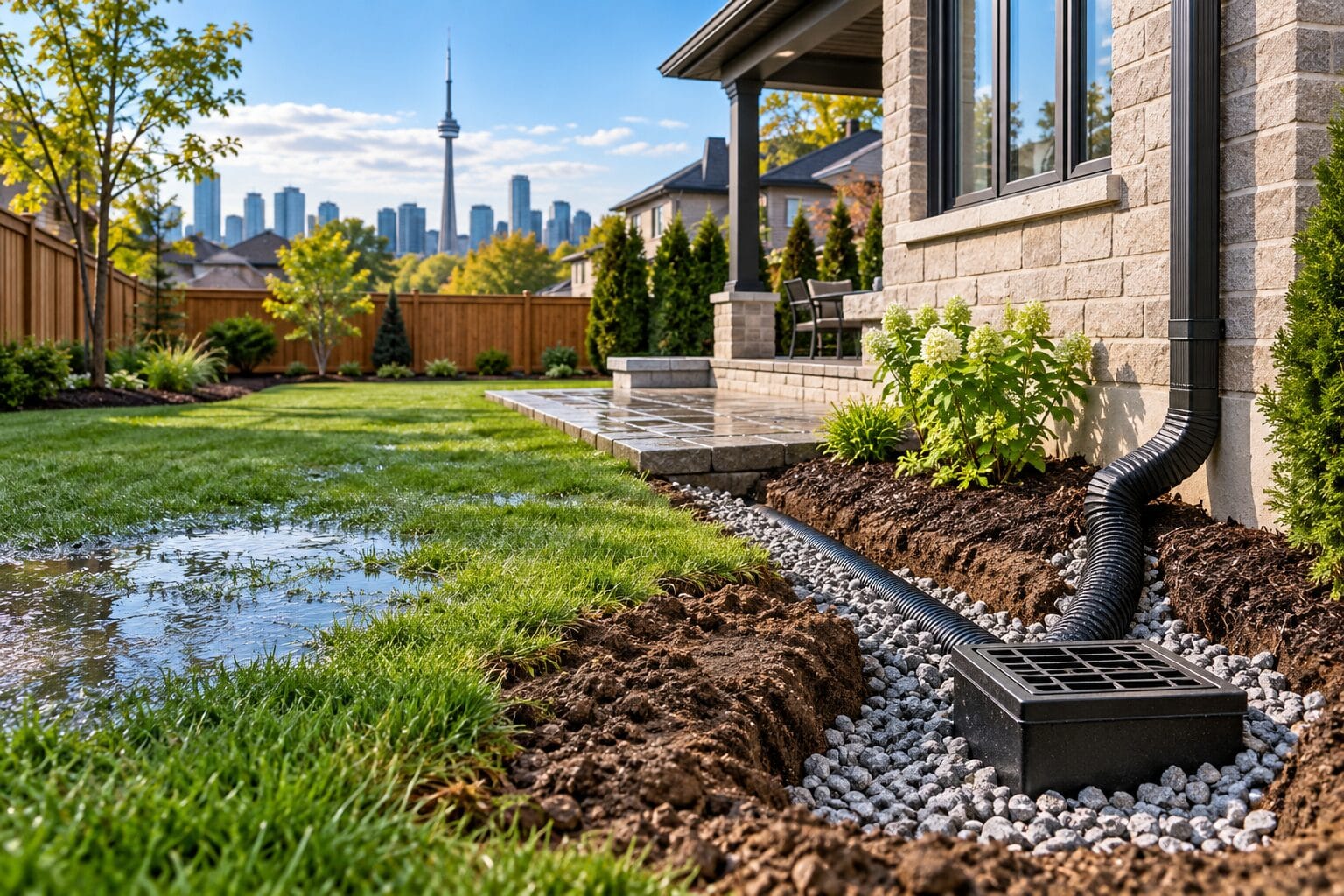
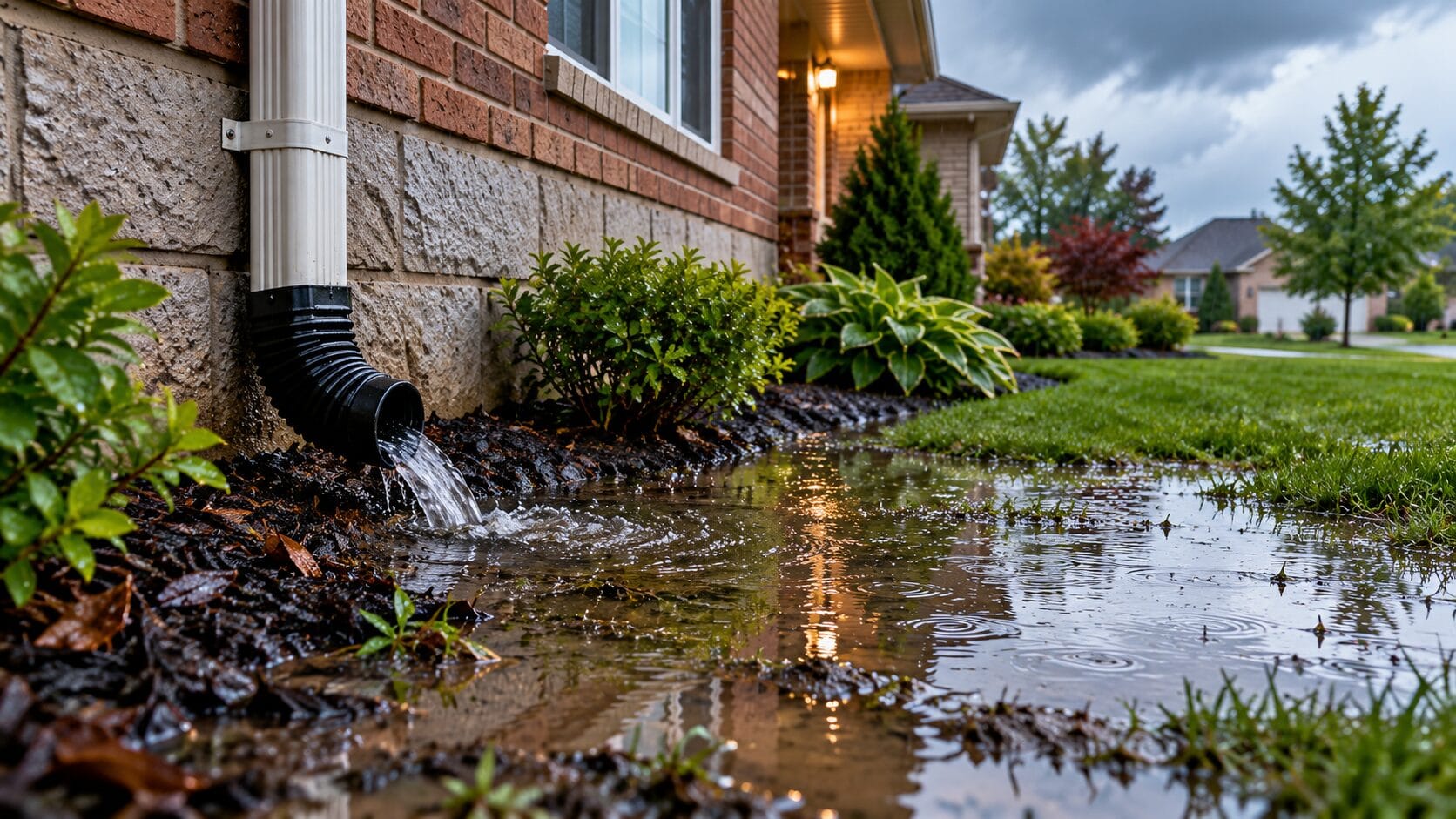
Pooling water around your home’s foundation after a heavy rainstorm is one of the most critical warning signs of poor exterior lot drainage. In Toronto and across the Greater Toronto Area (GTA), severe weather events, rapid snowmelt, and intense summer downpours regularly test a home’s ability to shed surface water away from its perimeter. When rainwater collects against foundation walls rather than draining toward municipal catch basins, it creates hydrostatic pressure that eventually causes foundation cracking, basement leaks, and mold growth.
Addressing surface drainage early is significantly more cost-effective than repairing structural foundation damage. In the GTA, basic downspout extensions and regrading cost between $850 and $2,500, while severe pooling may require a full French drain installation ranging from $3,500 to $8,500. Simple adjustments such as extending downspouts 6 feet away from walls or re-establishing positive lot slopes can often solve minor water retention issues.
This comprehensive guide breaks down the common causes of perimeter water pooling, the long-term risks to your home’s foundation and basement, practical DIY steps to mitigate runoff, and professional drainage solutions tailored to Ontario’s building standards and climate conditions. Protect your home’s structural integrity and prevent costly water damage by diagnosing your lot’s drainage performance today.
Top Reasons Water Pools Around Your Foundation
Understanding why rainwater collects near your home requires looking at how water flows across your entire property during a storm.
1. Negative Lot Grading & Soil Settlement
Over time, backfilled soil placed around a foundation during original construction settles and packs down. This creates a negative slope where the ground tilts back toward the home, directing thousands of gallons of roof runoff straight against basement walls.
2. Disconnected, Short, or Clogged Downspouts
A standard roof collects huge volumes of water during a downpour. If downspouts discharge water right at the base of your home or are clogged with leaves and debris, water spills over gutter edges and accumulates at the foundation footing.
3. Clay-Rich Soils in the GTA
Much of Southern Ontario features dense clay soils. Clay has low permeability, meaning it absorbs water very slowly compared to sandy or loamy soils. During heavy rainfall, water quickly saturates the topsoil and pools on the surface.
4. Clogged or Collapsed Weeping Tiles
Weeping tiles are perforated drainage pipes buried alongside your foundation footings. In older Toronto homes, original clay or corrugated weeping tiles can become clogged with sediment, crushed by roots, or deteriorate, preventing underground water from reaching the sump pump or municipal storm sewer.
Cost Planning: Exterior Drainage Solutions in Toronto & the GTA
| Drainage Solution | Typical Planning Range | Key Project & Material Drivers |
| Downspout Extensions & Basic Regrading | $850 – $2,500 | Hand excavation, topsoil/clay addition, downspout extension routing. |
| French Drain System Installation | $3,500 – $8,500 | Trenching depth, gravel backfill, filter fabric, discharge outlet. |
| Exterior Waterproofing & Weeping Tile Replacement | $120 – $250 / linear ft | Full excavation to footings, delta membrane, new weeping tile, gravel. |
| Eavestrough & Gutter Replacement | $1,800 – $4,500 | Linear footage, aluminum gauge, leaf guard integration, fascia repairs. |
Dangers of Ignoring Standing Water Around Your Home
Leaving pooling water unaddressed exposes your property to severe structural and health risks over time:
- Hydrostatic Pressure & Basement Leaks: Saturated soil exerts immense lateral pressure against basement walls, causing poured concrete to crack and block walls to bow, leading to active basement leaks.
- Foundation Settling & Mortar Deterioration: Constant water saturation softens the soil beneath foundation footings, causing uneven home settling and eroding brick mortar lines.
- Efflorescence & Mold Growth: Trapped moisture rising through concrete slabs creates white mineral deposits (efflorescence) and fosters dangerous toxic mold growth inside interior finished walls.
- Mosquito Breeding & Landscape Erosion: Stagnant surface water that sits for more than 48 hours becomes a breeding ground for pests and washes away expensive topsoil and garden beds.
How to Fix Perimeter Water Pooling: Step-by-Step
1. Maintain Positive Slope (10-Foot Rule)
According to Ontario Building Code guidelines, ground surfaces immediately adjacent to foundation walls should slope downward at least 1 inch per foot for the first 6 to 10 feet away from the building to ensure proper gravity drainage.
2. Extend Downspouts Away From Foundation
Ensure all downspouts discharge rainwater at least 5 to 6 feet away from foundation walls into well-vegetated garden areas, pop-up emitters, or rainwater collection systems.
3. Install a Catch Basin or Surface French Drain
For low-lying spots in your yard that naturally collect surface runoff, installing a surface catch basin or a buried French drain (perforated pipe surrounded by clear stone and geotextile fabric) effectively intercepts and redirects standing water.
4. Clear & Upgrade Eavestrough Systems
Inspect gutters twice a year to remove leaves, needles, and sediment. Upgrade to 5-inch or 6-inch seamless aluminum gutters if heavy rainfall routinely overflows your current system.
Frequently Asked Questions
How long should water pool around a house after heavy rain?
Water should drain away from your home within 2 to 4 hours after rainfall stops. Surface water that remains standing near your foundation for longer than 24 hours indicates a serious lot grading or drainage failure that requires professional attention.
How far should ground slope away from a house foundation?
The ground should slope downward at least 6 inches over the first 10 feet away from the foundation wall (a 5% minimum slope) to prevent water from soaking into the backfill zone around your home.
Is standing water around a house normal in heavy clay soil?
While clay soil absorbs water slowly, standing water right against foundation walls is never considered normal or safe. Even in clay-heavy GTA regions, proper lot grading and surface swales should carry water toward municipal drainage paths rather than letting it sit against your home.
What is the difference between a French drain and a weeping tile?
A French drain is a shallow trench system filled with gravel and a perforated pipe designed to capture and redirect surface and shallow groundwater away from low points in a yard. A weeping tile is installed deep underground at the base of your foundation footings to collect groundwater and prevent hydrostatic pressure against basement walls.
Will extending my downspouts stop my basement from leaking?
Extending downspouts is often the easiest and most effective first step. Redirecting roof runoff 6 feet away from your home eliminates thousands of gallons of direct water pressure on your foundation, which frequently stops minor basement dampness and wall seepage.
Protect Your Foundation with Professional Drainage Solutions
Don’t wait for minor surface pooling to turn into a costly flooded basement or structural foundation repair. Jacko Contracting provides comprehensive lot grading, French drain installation, weeping tile inspection, and exterior waterproofing services across Toronto and the GTA.
Stop perimeter water pooling before damage occurs.
Contact our team today to schedule an on-site drainage assessment.
- Phone: 647-642-4664
- Request a Site Assessment: https://jackocontracting.com/contact-us/
- Email: info@jackocontracting.com
- Service Area: Toronto, Etobicoke, North York, Scarborough, Mississauga, Brampton, Vaughan, Markham, and the GTA