Executive Summary
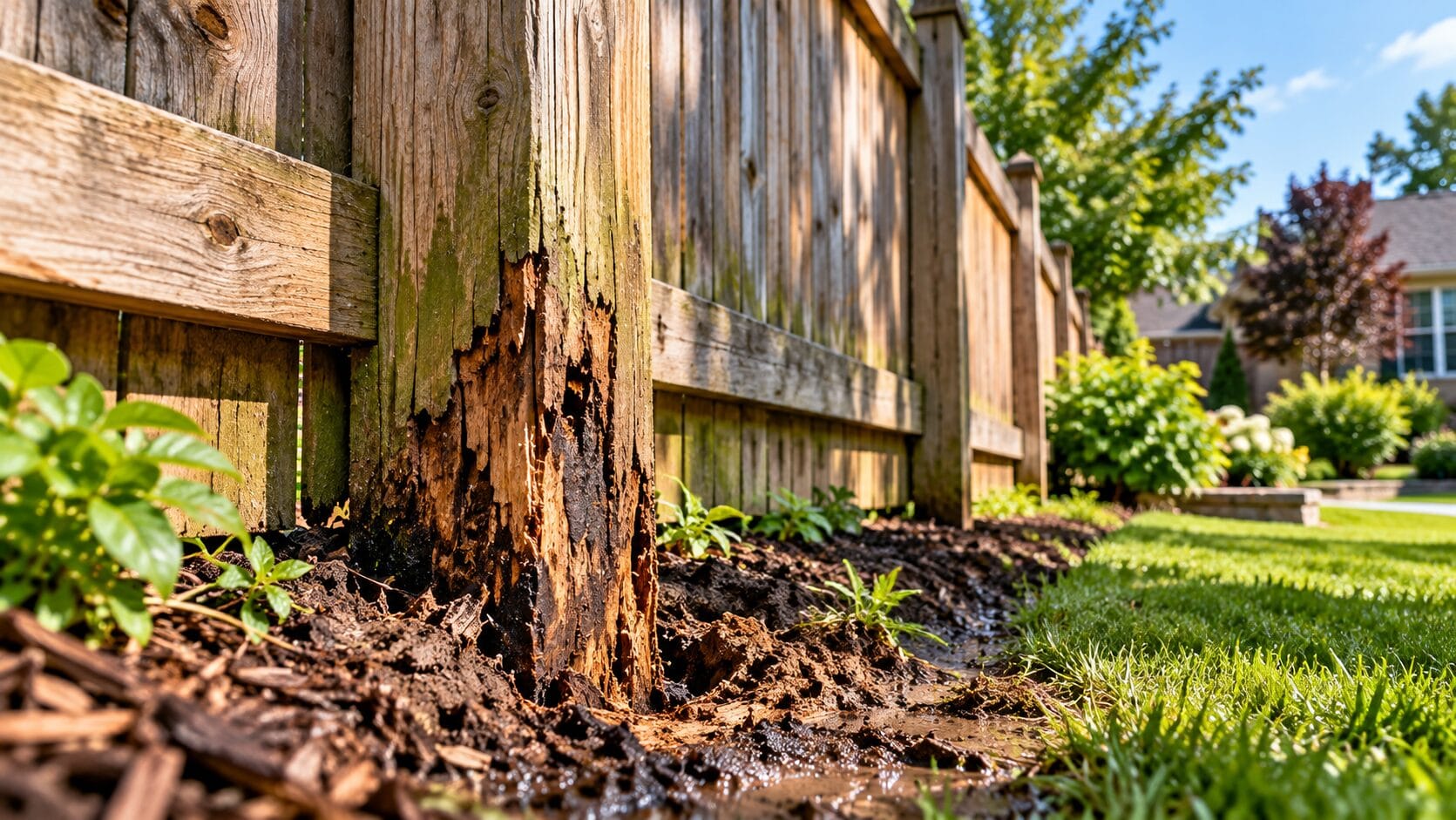
A fence post that breaks or rots where it meets the ground is rarely just a cosmetic problem. The damage often occurs at the point where moisture, oxygen, soil contact and repeated movement combine to weaken the timber. Once the post loses structural strength, the connected rails and fence panels can begin to lean, separate or pull away from neighbouring sections.
For Toronto and GTA homeowners, the right solution depends on where the failure originates, how many posts are affected, the condition of the existing fence and whether the original footing remains stable. Replacing one damaged post may be sufficient when the surrounding structure is sound. However, installing new posts without correcting poor drainage, unstable soil or inadequate footing depth can lead to the same problem recurring.
Ontario repair-price guidance published in 2026 places replacement of a rotted fence post at approximately $250–$450 per post, including removal of the old post and concrete, installation of a replacement post and footing, and reattachment of the rails. Actual Toronto project costs can vary with access, fence design, disposal, materials and the number of posts requiring work.
This guide explains how to identify the underlying failure, select a repair method that addresses the cause, compare repair against full fence replacement and evaluate the costs before committing to the work.
1. Why Fence Posts Fail at Ground Level
The ground line is a critical stress point for a timber fence post. The section immediately above and below the soil surface can experience changing moisture conditions while carrying the weight of the fence and resisting wind pressure. A post may look acceptable above ground while its base has already lost much of its strength.
Biological decay and concealed rot
Wood exposed to persistently damp conditions can deteriorate over time. Soil, mulch and vegetation piled against the post can keep the base wet, while cracks or damaged protective treatments allow moisture to penetrate. The result may be a post that appears intact but has a weakened core or a soft, deteriorated outer section.
A screwdriver or similar tool may reveal soft timber, but probing alone cannot establish the full extent of the damage. A post that feels firm at the surface may still be compromised below grade.
Water accumulation around the footing
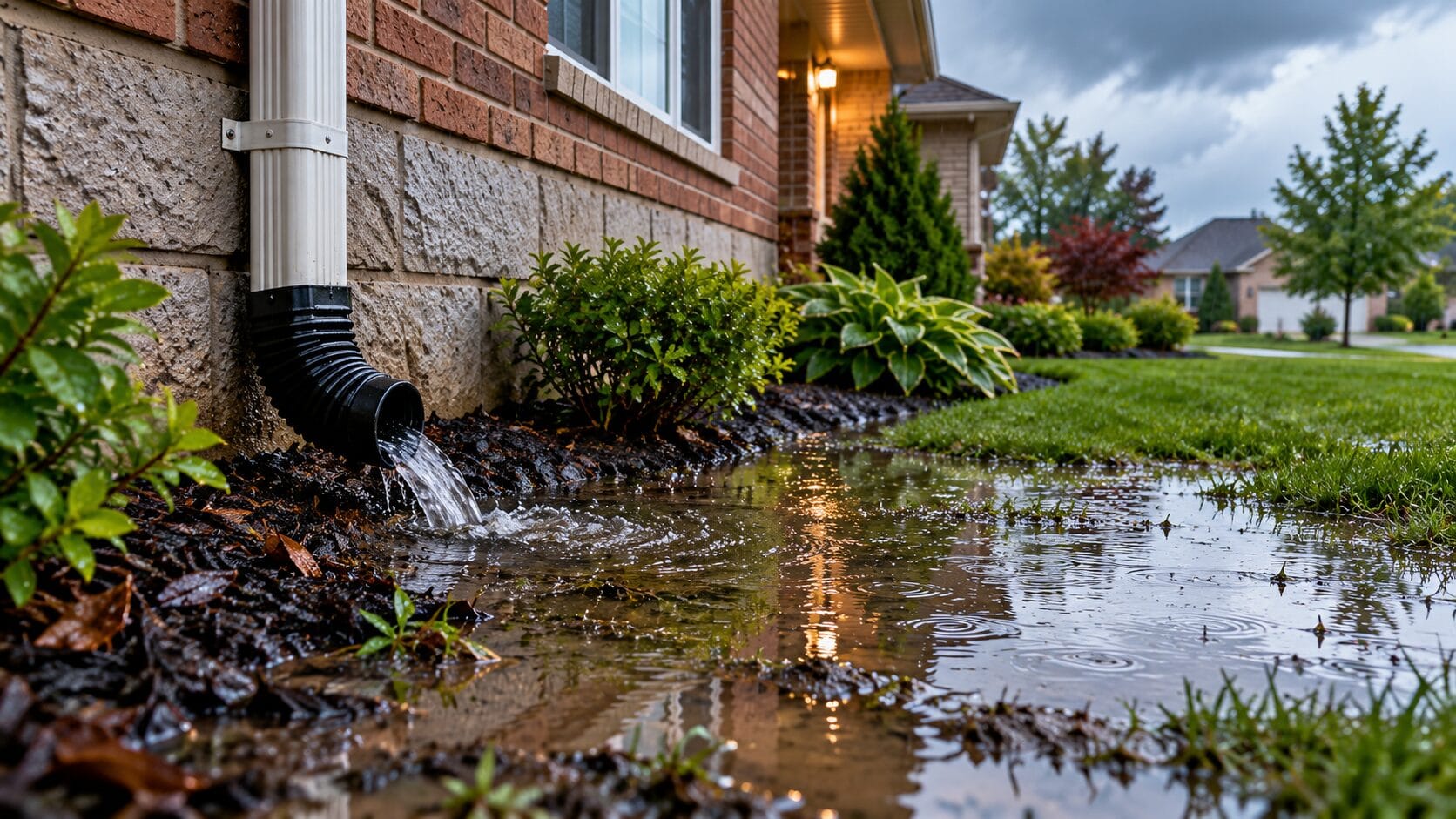
Poor drainage can keep the soil around a post saturated. Downspouts, low spots, compacted ground and runoff from patios or neighbouring surfaces can direct water toward the fence line. In these conditions, replacing the post without addressing the water source treats the symptom rather than the cause.
Frost-related movement and unstable footings
Toronto-area freeze-thaw cycles can contribute to movement where soil conditions, footing design or installation depth are inadequate. A post that leans after winter may have shifted in its footing rather than rotted. The distinction matters: a structurally sound post may be reset, while a decayed post generally needs replacement.
Structural loading and connection failure
Heavy privacy panels, wind exposure, sagging gates and loose rail connections place additional stress on fence posts. If a gate post moves, the gate can drop out of alignment. If several posts lean in the same direction, the problem may involve a shared cause—such as wind loading, ground movement or an unstable fence line—rather than independent failures.
2. How to Diagnose the Failure Before Choosing a Repair
A reliable repair starts with identifying what has actually failed. The visible lean is only one part of the assessment.
| Observed condition | Likely cause | Appropriate next step |
| Timber is soft, cracked or crumbling at ground level | Decay or loss of structural strength | Assess the extent of rot; replace the post if the load-bearing section is compromised |
| Post and concrete footing move together | Loose soil, footing instability or ground movement | Investigate the footing and soil conditions before resetting or replacing |
| Post is firm but tilted after winter | Possible frost-related movement or inadequate footing | Check alignment and footing stability; reset only if the post remains sound |
| Several consecutive posts lean in the same direction | Shared loading, drainage or ground-stability issue | Inspect the fence line as a system rather than replacing posts individually |
| Rails are separating from otherwise upright posts | Failed fasteners, damaged connections or timber splitting | Repair connections if the posts and rails retain adequate strength |
| Gate sags and the hinge post moves | Hinge-post failure, excessive loading or footing movement | Check the post, hinges, gate weight and footing together |
| Multiple posts are soft, with widespread leaning and damaged rails | Broad structural deterioration | Compare the cost of multiple post replacements with a new fence |
Important distinction: a leaning post is not automatically a rotted post. If the timber is sound but the footing has shifted, the repair may involve excavation and resetting. If the timber has lost structural integrity, straightening it or adding a brace will not restore the strength of the damaged section.
Before work begins, the assessment should establish how many posts are affected, whether the rails can be reused, whether the existing concrete must be removed and whether water or soil movement is contributing to the failure.
3. Fence Post Repair vs. Replacement: Which Method Is Appropriate?
Not every failing post needs the same intervention. The method should match the condition of both the timber and the footing.
Option A: Reinforce a sound post
Reinforcement may be suitable where a post is still structurally sound and the problem is limited to minor movement or a connection that can be strengthened. Depending on the design, a contractor may use appropriate brackets, supports or additional fastening.
Limitation: reinforcement does not restore decayed timber. If the post is soft at the base or has split through its load-bearing section, adding hardware can create a temporary appearance of stability without resolving the underlying weakness.
Option B: Reset a shifted post
Where a post remains sound but its footing has moved, excavation and resetting may be appropriate. The existing footing and surrounding soil need to be evaluated first. If the concrete is cracked, loose or poorly positioned, simply pushing the post upright and filling the gap may not provide a durable repair.
Option C: Replace the damaged post and footing
Post replacement is generally the more appropriate option when rot or structural damage has weakened the timber. The work typically involves supporting the connected fence section, detaching the rails, removing the damaged post and any unsuitable concrete, installing the replacement post and footing, and reconnecting the fence.
The replacement must be aligned with the existing fence and installed to suit the site’s soil, drainage, fence height and loading. The correct footing approach depends on site conditions; there is no single depth or concrete detail suitable for every fence.
Option D: Replace the affected fence section
Sometimes the post is only one part of the failure. Rails may have split, boards may be damaged or adjoining posts may no longer provide reliable support. Rebuilding the affected section can be more practical than fitting a new post into a fence whose surrounding components are already deteriorated.
| Repair method | Best suited to | Main limitation |
| Reinforcement or bracing | Sound post with limited movement | Cannot repair significant rot |
| Resetting | Sound post with a shifted or unstable footing that can be corrected | Does not solve timber decay or persistent drainage problems |
| Post and footing replacement | Structurally weakened or rotted post | May reveal additional damage once excavated |
| Section reconstruction | Several connected components are damaged | Higher initial cost than a single-post repair |
| Full fence replacement | Widespread deterioration or repeated failures | Highest initial investment |
The practical rule is straightforward: repair sound components, replace structurally failed components and correct the conditions that caused the failure.
4. Fence Post Replacement Costs in Toronto and the GTA
The cost of fence post replacement Toronto homeowners receive will depend on the amount of removal, the fence construction and the work required to restore the line to a stable, aligned condition.
An Ontario landscaping contractor’s 2026 pricing guide gives the following indicative figures.
| Repair or replacement work | Indicative cost (CAD) |
| Brace a leaning post that remains sound | $150–$300 per post |
| Replace a rotted post, including old post and concrete removal, new post and footing, and rail reattachment | $250–$450 per post |
| Reset a shifted post where the post can be reused | $300–$500 per post |
| Replace three or four cedar fence panels | $400–$900 |
| Replace a full pressure-treated fence | $35–$60 per linear foot |
| Replace a full cedar fence | $50–$90 per linear foot |
| Remove an existing fence during full replacement | Approximately $5–$12 per linear foot, potentially additional |
What can increase the cost?
A quote can increase when the existing concrete footing is difficult to remove, access is restricted, the fence is tall or heavy, the gate requires realignment, or adjacent rails and panels must also be rebuilt. Disposal, material selection, difficult excavation and drainage corrections can add further costs.
The number of affected posts also matters. Replacing several posts during one mobilization may offer better value per post than arranging separate visits. However, a contractor should still assess each location rather than assume every post has the same failure mechanism.
How to compare quotes accurately
Ask each contractor to specify:
- Whether the price includes removing and disposing of the existing post and concrete.
- The replacement material, dimensions and treatment.
- How the new footing will be installed for the actual site conditions.
- Whether rails, panels, fasteners and gate alignment are included.
- Whether drainage or ground movement needs to be addressed separately.
- What additional costs could arise if concealed damage is discovered.
A low price may exclude concrete removal, disposal or rail repairs. Comparing the complete scope—not just the per-post figure—gives a more realistic basis for choosing a contractor.
5. When Is Full Fence Replacement the Better Investment?
The decision should be based on the condition of the entire fence, not simply the number of posts that currently look damaged.
Repair is generally worth evaluating first when:
- One or two posts have failed but the remaining posts are firm and aligned.
- Rails and panels remain serviceable.
- The fence is relatively recent or made from materials worth preserving.
- The underlying drainage or footing problem can be corrected without rebuilding the whole line.
Full or partial replacement deserves closer consideration when:
- Several posts have significant rot at ground level.
- The rails, panels and fasteners are deteriorating throughout the fence.
- Repairs have been repeated along the same fence line.
- The existing design or construction cannot provide reliable support without extensive reconstruction.
- The combined cost of replacing posts and damaged sections approaches the cost of a new fence.
There is no universal rule that a particular number of failed posts automatically makes replacement more economical. A long fence with several damaged posts but otherwise sound materials may still be worth repairing. Conversely, a shorter fence with widespread decay may justify rebuilding sooner.
A useful comparison is to obtain a repair estimate and a separate estimate for full replacement. Both should identify removal, materials, installation and disposal so the homeowner can compare the actual scope and expected remaining service life.
6. Toronto Fence Requirements to Check Before Rebuilding
Fence replacement can involve more than construction details. Before changing the fence’s height, location, design or use, homeowners should check the requirements that apply to their property.
The City of Toronto’s Fence Bylaw includes rules concerning fence height, materials, location and swimming-pool enclosures. Requirements can vary according to where the fence is situated and whether it encloses a pool. Pool enclosures have additional requirements, including specific construction and gate provisions. https://www.toronto.ca/city-government/public-notices-bylaws/bylaw-enforcement/fences/
For boundary fences, confirm the property line and discuss the proposed work with the neighbour where appropriate. Do not assume that an existing fence is located exactly on the legal boundary. If the repair requires access to neighbouring land, obtain permission or investigate the applicable legal process before starting work.
For properties outside Toronto city limits, check the rules of the relevant municipality, as requirements may differ across the GTA.
Frequently Asked Questions
1. How much does fence post replacement cost in Toronto?
Fence post replacement in Toronto can cost approximately $250–$450 CAD per post, based on an Ontario contractor’s pricing guide. This estimate includes removing the old post and concrete, installing a replacement post and footing, and reattaching the fence rails. The final cost depends on excavation difficulty, materials, site access, disposal and the condition of the surrounding fence.
2. Should I replace individual fence posts or install a completely new fence?
Replacing individual posts is suitable when the remaining posts, rails and panels are structurally sound. A complete fence replacement is worth considering when multiple posts are rotted, rails are damaged, panels are deteriorating or the fence has widespread structural problems. Compare the cost of repairing the affected sections with the cost of installing a new fence before making a decision.
3. Can a rotted fence post be repaired without replacing it?
A post with minor movement but sound timber may be reinforced or reset if its footing can be repaired. However, a post with significant rot, a weakened base or structural splitting should be replaced. Brackets and braces cannot restore the strength of decayed wood.
4. What causes fence posts to rot at ground level?
Fence posts rot when moisture remains in contact with timber for extended periods, allowing decay to develop. Poor drainage, water pooling around the footing, soil or mulch piled against the wood, and damaged protective treatment can contribute to the problem. The repair should address the damaged post and, where possible, the source of moisture to reduce the risk of recurring deterioration.
5. Should a leaning fence post be replaced after winter?
Not every leaning post needs replacement. If the timber is sound and the footing has shifted because of soil movement or freeze-thaw conditions, resetting the post may resolve the problem. If the base is rotted, split or structurally weakened, replacement is the appropriate solution. Inspect the post, footing and connected rails to determine the cause before choosing a repair method.
Get Professional Fence Repair or Replacement Advice
A fence post that has rotted at ground level can compromise an entire section, but replacing the whole fence is not always necessary. The right solution starts with determining whether the failure is caused by timber decay, a shifted footing, drainage or broader structural deterioration.
Jacko Contracting provides fencing services for homeowners in Toronto and the GTA. If your fence is leaning, the posts are soft at the base, or the gate no longer aligns properly, an assessment can help establish the work required and whether targeted repairs or replacement offer better value.
Why Homeowners Choose Jacko Contracting
Fence repairs and replacements are investments in your property’s privacy, security and curb appeal. Choosing a contractor with clear protections, relevant experience and a commitment to workmanship helps homeowners make informed decisions about their projects.
At Jacko Contracting, homeowners across Toronto and the GTA can benefit from the following company credentials and service commitments:
- $2 Million Liability Insurance: Liability coverage designed to provide protection against covered claims associated with construction work.
- 5-Year Workmanship Warranty: A stated workmanship warranty that gives homeowners added reassurance about the quality of completed work. Ask about the applicable terms and exclusions for your specific fencing project.
- WSIB Clearance Certificate: A published company credential that homeowners can request to review when assessing contractor compliance.
- Home Depot Pro Affiliation: Jacko Contracting identifies itself as a Home Depot Pro partner, supporting its professional approach to construction and renovation projects.
- 5-Star Google Reviews: The company’s contact page highlights its customer ratings. Homeowners can review customer feedback to learn about other clients’ experiences.
- 15+ Years of Experience: Jacko Contracting highlights more than 15 years of industry experience across its construction and renovation services.
- Free Estimates: Homeowners can discuss their fence repair or replacement requirements and request a project estimate before deciding how to proceed.
For a fence with rotting posts, leaning sections or unstable footings, the goal is not simply to replace damaged timber. It is to identify the cause of failure, assess the surrounding structure and determine the most practical repair or replacement option for the property.
Planning a fence repair or replacement in Toronto or the GTA?
Contact Jacko Contracting to discuss your project and request a free estimate.
Phone: 647-642-4664
Email: info@jackocontracting.com
Website: www.jackocontracting.com
Request a Free Estimate: https://jackocontracting.com/contact-us/
Explore our Fence Repairing Services to learn more about how Jacko Contracting can help restore your fence’s stability, functionality and appearance.