
Table of Contents
Constructing a custom residence in Canada is not a routine transaction. It is an architectural oath to your future — a sanctuary drafted in timber and stone. Before pen touches paper, restraint is wisdom. Astute homeowners do not hurry this juncture; they interrogate it. They authenticate credentials, dissect agreements, and examine assurances with almost forensic attention.
Once the contract crystallizes, retreat is no longer effortless. Diligence at the outset is not optional — it is armor.
This editorial compass outlines what seasoned, fiscally astute homeowners verify before engaging a custom home builder in Canada — and how you can fortify your investment from the very first handshake.
Why the Right Custom Home Builder Determines Everything
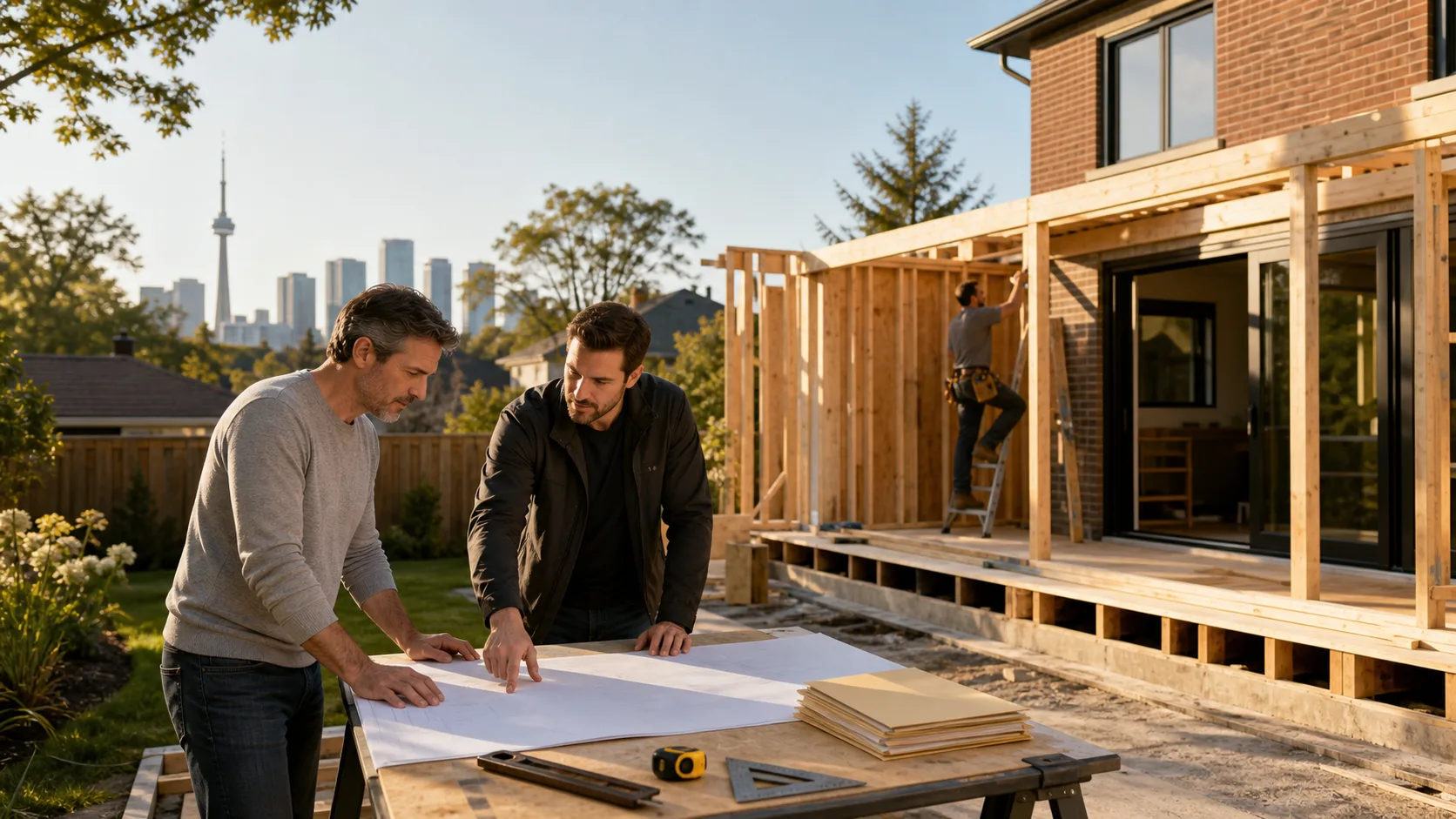
A custom residence is not merchandise awaiting purchase. It is a living blueprint sculpted through collaboration. The builder you appoint becomes your ally for months — occasionally for more than a year. Their acumen, candor, coordination, and ethical backbone will reverberate through your budget, your stress threshold, and your ultimate outcome. Across Canada, bespoke construction typically fluctuates between $250 and $400 per square foot, influenced by geography, material selection, and architectural intricacy. Even a modest 2,000-square-foot dwelling may ascend toward $500,000–$800,000 or beyond. With figures of this magnitude, speculation has no sanctuary. Select wisely, and the journey unfolds with cadence and clarity. Select carelessly, and the experience may dissolve into overruns, postponements, and sleepless calculations at midnight
Licensing and Insurance: The First Immutable Verification
Before paint palettes or marble countertops are discussed, credentials demand inspection. In provinces such as Ontario, builders must register with the Home Construction Regulatory Authority (HCRA) and participate in warranty enrollment programs like Tarion. Other provinces maintain parallel regulatory frameworks with their own stipulations. Request unequivocal documentation for: • A valid provincial builder’s license • Proof of liability insurance • Workers’ compensation enrollment • Builder’s risk insurance coverage Verbal reassurance is insufficient. Obtain documentation and verify it independently. A reputable builder does not bristle at scrutiny — professionalism welcomes it.
Professional Affiliations and Industry Credentials
Affiliation with the Canadian Home Builders’ Association (CHBA) is not mere ornamentation. It signals adherence to a codified ethical framework and evolving industry benchmarks. Further, certifications in energy-efficient construction, sustainable methodologies, and advanced structural systems indicate that the builder is not marooned in obsolete practices. Modern homeowners increasingly pursue residences engineered for efficiency — dwellings that sip energy rather than guzzle it. Pause and consider: does this builder demonstrate intellectual agility in modern building science, or are they echoing habits from another decade?
Specialized Custom Experience — Not Generic Construction
There is a gulf between production building and bespoke creation. Tract home contractors operate on repetition; custom builders navigate nuance. Request tangible evidence: • A curated portfolio of completed custom homes • Access to an active job site • References tied to projects resembling your vision While touring, examine more than surface polish. Are materials shielded from the elements? Is the site orderly? Is craftsmanship meticulous? Disorder often whispers louder than any sales presentation.
Reputation: The Echo That Lingers
Digital reviews are informative, yet direct dialogue is revelatory. Speak with at least three former clients.
Inquire candidly:
• Did expenditures remain within the projected range?
• Were unforeseen charges introduced?
• How were disagreements resolved?
• Would they engage the builder again?
Also evaluate records with the Better Business Bureau (BBB). A flawless rating is admirable; however, the builder’s response to criticism often reveals greater character than praise ever could.
Transparency during conflict signals maturity, not weakness.
Contractual Precision: Ambiguity Is a Liability
A construction agreement must resemble a blueprint — exact, not abstract.
It should delineate:
• Explicit scope of work
• Specific materials and brand names
• Defined timeline milestones
• Structured payment schedule
• Change order procedures
• Warranty enrollment details
Vague phrases such as “high-end finishes” without specification are fertile ground for dispute. If a detail is absent from the document, assume it is absent from reality.
Consulting a construction attorney before signing may appear cautious; in truth, it is fiscally astute.
Financial Transparency and Allowances
Many disputes germinate from misunderstood allowances — placeholder sums allocated for finishes like cabinetry, lighting, or flooring. If these allocations are artificially restrained, upgrades become inevitable — and costly. Demand a comprehensive, itemized budget. Clarify how material price escalations will be addressed. Identify the markup percentage applied to change orders. A builder confident in integrity does not obscure arithmetic.
Timeline Realism: Optimism Without Illusion
Delays are not anomalies; they are variables. Weather fluctuations, municipal permitting, and supply chain disruptions may alter schedules.
What distinguishes professionalism is anticipation and communication.
Ask directly:
• What is the projected completion window?
• What contingencies exist for common delays?
• How will updates be conveyed?
A pragmatic timeline cultivates trust. An improbably swift promise may conceal inexperience.
Begin with Certainty — Not Guesswork
Prepared to initiate the process? Obtain a Free Custom Home Estimate today. We evaluate your lot, architectural vision, and financial framework to present a lucid projection.
Why Homeowners Select Jacko Constracting
✔ Fully Licensed & Insured
✔ Registered Warranty Provider
✔ Transparent Pricing Architecture
✔ 15+ Years of Custom Home Mastery
✔ 5-Star Client Endorsements
✔ Dedicated Project Steward for Every Build
We construct more than dwellings. We construct assurance.
Speak with a Builder
Prefer immediate clarity?
📞 Call Us Now: 647-6424664
Final Reflections
Hiring custom home builders in Canada is not a race toward the lowest quotation. It is the pursuit of composure. Licensing validation, insurance confirmation, contractual lucidity, financial transparency, and verified references — these are not embellishments. They are safeguards. Approach the decision with deliberation, and ambiguity dissolves into conviction. Your home becomes more than a structure; it becomes a carefully stewarded investment grounded in trust. Prudent homeowners do not rush their signature. They authenticate first — and then they build.
Frequently Asked Questions
Generally between 8 and 18 months, contingent upon scale, architectural complexity, municipal approvals, and climatic conditions.
Most custom builds range from $250 to $400 per square foot, though luxury specifications may surpass this threshold.
Engaging a construction lawyer ensures contractual precision and safeguards your financial interests.
It protects the structure during construction against hazards such as theft, fire, and weather-related damage.
Interview at least three. Comparative evaluation clarifies communication style, transparency, and professional compatibility.